
Podcasts
I am creating these podcasts out of a deep curiosity and passion for the many ways mindfulness is taught, practiced, and lived. Through these conversations, I hope to offer spaces for reflection, dialogue, and inspiration.
On the Cushion: The Mindfulness Educators Podcast focuses on the art of teaching mindfulness and meditation - how educators guide others and hold space with authenticity, skill, and care.
InsideMindfulness widens the lens. Through conversations with people from diverse backgrounds and walks of life, the podcast explores how mindfulness, meditation, and related contemplative practices shape spirituality, awareness, and compassion.
For each podcast, I draw out key teachings, images, and metaphors from the conversation, offering reflections that I hope will support and nourish you in your own work - whether as a meditation teacher, a practitioner, or someone simply curious about living with greater awareness. See below.
On the Cushion with Clive Holmes

Based in South West Scotland, Clive Holmes has over 25 years’ experience teaching meditation at Kagyu Samye Ling Monastery and international Samye Dzong centres.
He has completed a year-long intensive retreat, studied with many teachers across Asia and Europe, and holds a degree in Western Philosophy.
In this episode we explore Clive’s background and his inspiring and gentle approach to teaching meditation.
-
Clive co-edited Taming the Tiger and Restoring the Balance by Choje Akong Tulku Rinpoche and holds an honorary Teaching Fellowship at Aberdeen University’s School of Education.
-
-
1. Model "Relaxation and Kindness"
Clive emphasises that a teacher's most powerful tool is their own state of being. He suggests that you should aim to communicate a sense of "grace, luminosity, and clarity." If the teacher embodies unconditional warm-heartedness, it creates an "affiliative effect" that helps students feel safe enough to relax.
2. View Mindfulness as "Remembering to Remember"
Move beyond a rigid definition of mindfulness. Clive describes it as a "homecoming" to the present moment. It is the practice of recollection - noticing when we have spun off into ego stories or overthinking and gently returning to awareness.
3. Prioritise Flexibility and Adaptability
When asked how to recognise a good teacher, Clive’s answer is simple: flexibility. A teacher should adapt their practices to the circumstances of their own life and the specific needs of the students in the room, rather than sticking to a rigid, one-size-fits-all script.
4. Address the "Foundation of Neurosis"
You cannot build a "palace on quicksand." Clive notes that many Westerners try to layer meditation on top of deep-seated trauma or neurosis. Teachers should be aware of "healing the wounds" and perhaps incorporate frameworks like Internal Family Systems (IFS) to help students navigate their different "selves" and inner "tigers."
5. Create a "Safe Space" for Practice
Deep meditation requires the body to feel safe. Clive uses his voice, humor, and poetry to lower the students' defenses. He uses the metaphor of boiling water: only when the water cools (the mind settles in a safe environment) can the surface become a mirror.
6. Balance Stillness with Movement
"Too much sitting is probably part of the problem in our culture." Clive recommends balancing sitting meditation with physical movement like Qigong, Tai Chi, or walking meditation. This helps students become "embodied" and prevents them from getting stuck in their heads.
7. Stay Within the "Self-Care Zone"
As a teacher, you should encourage students to go beyond their comfort zone to find growth, but strictly ensure they never leave their self-care zone. This is especially important for students with mental health issues or unprocessed trauma.
8. Use Simplicity and Directness
Avoid overcomplicating teachings with "layers and layers of words." Clive highlights the "Buddha of Infinite Simplicity," noting that the ego-intellect loves to make things complex to protect its domain. Simple, direct pointers allow the teaching to resonate like a pebble dropped in a pond.
9. Teach from Personal Retreat Experience
Clive believes it is essential for teachers to "go in to go out." Regular retreats allow teachers to face their own obstacles, distractions, and "ego-shadows." This ensures that when you teach, you are sharing genuine experience rather than just repeating words "like a parrot."
10. Be a "Spiritual Friend" (Kalyana-mitra)
Instead of positioning yourself as an unreachable authority figure, view yourself as a Kalyana-mitra or spiritual friend. This involves holding space, embodying stability, and planting simple sentences or insights that students can take away and apply to their own lives.
-
1. The Motorised Tripod (Mindfulness vs. Chaos)
Clive compares the untrained mind to a camcorder strapped to a horse; the resulting footage is shaky, noisy, and meaningless.
The Lesson: Mindfulness acts as a motorised tripod. It doesn't change the "scenery" of your life, but it stabilises the camera so you can finally see the world with "BBC quality" clarity and insight.
2. The Stained Silk (Purification)
Imagine a beautiful piece of silk that you want to dye a brilliant saffron color. If the silk is covered in mud, the dye won't take; you'll just have stained fabric.
The Lesson: We often try to "dye" our minds with meditation while our "silk" is still muddy with neurosis and conditioning. We must first purify the stains (unprocessed trauma and habits) so the practice can actually transform us.
3. One Candle Lighting Another
Clive references the Buddha’s teaching that one candle can light a hundred others without its own flame diminishing.
The Lesson: This represents enthusiasm. A teacher’s role isn't to "give" knowledge away, but to use their own "flame" (joy and practice) to ignite the potential already existing within the student.
4. The Mirror in the Water
When water is boiling, the surface is full of bubbles and chaos. When it cools and settles, the surface becomes a mirror.
The Lesson: You cannot "force" the mind to be a mirror. You simply provide the safe space and "cool" temperature for the mind to settle. Once the agitation stops, clarity (insight) happens naturally.
5. Taming the Inner Tiger
This is a central theme in Clive’s work, referring to the "wild" aspects of our ego and emotions.
The Lesson: You don't "kill" the tiger or demonise your difficult emotions. Instead, through Internal Family Systems (IFS), you bring the tiger into the family structure, where the "True Self" sits at the head of the table as the conductor of the orchestra.
6. The Swiss Army Knife
Clive describes the various techniques he teaches (body scans, breathing, visualisation, Qigong) as a Swiss Army knife.
The Lesson: Different life situations require different tools. Sometimes you need the "scissors" of sharp focus, and other times the "nail clippers" of gentle self-care. A teacher provides the full toolkit so the student is prepared for anything.
7. The Parachute
He mentions that opening up to meditation can sometimes be like "opening Pandora's box" for people with deep-seated issues.
The Lesson: The teacher must be there like a parachute. When a student's old conditioning begins to fall away or they feel overwhelmed by what they discover, the teacher provides the support to ensure a safe landing.
-
Find out more about Clive’s work here.
On the Cushion with Bill Paterson
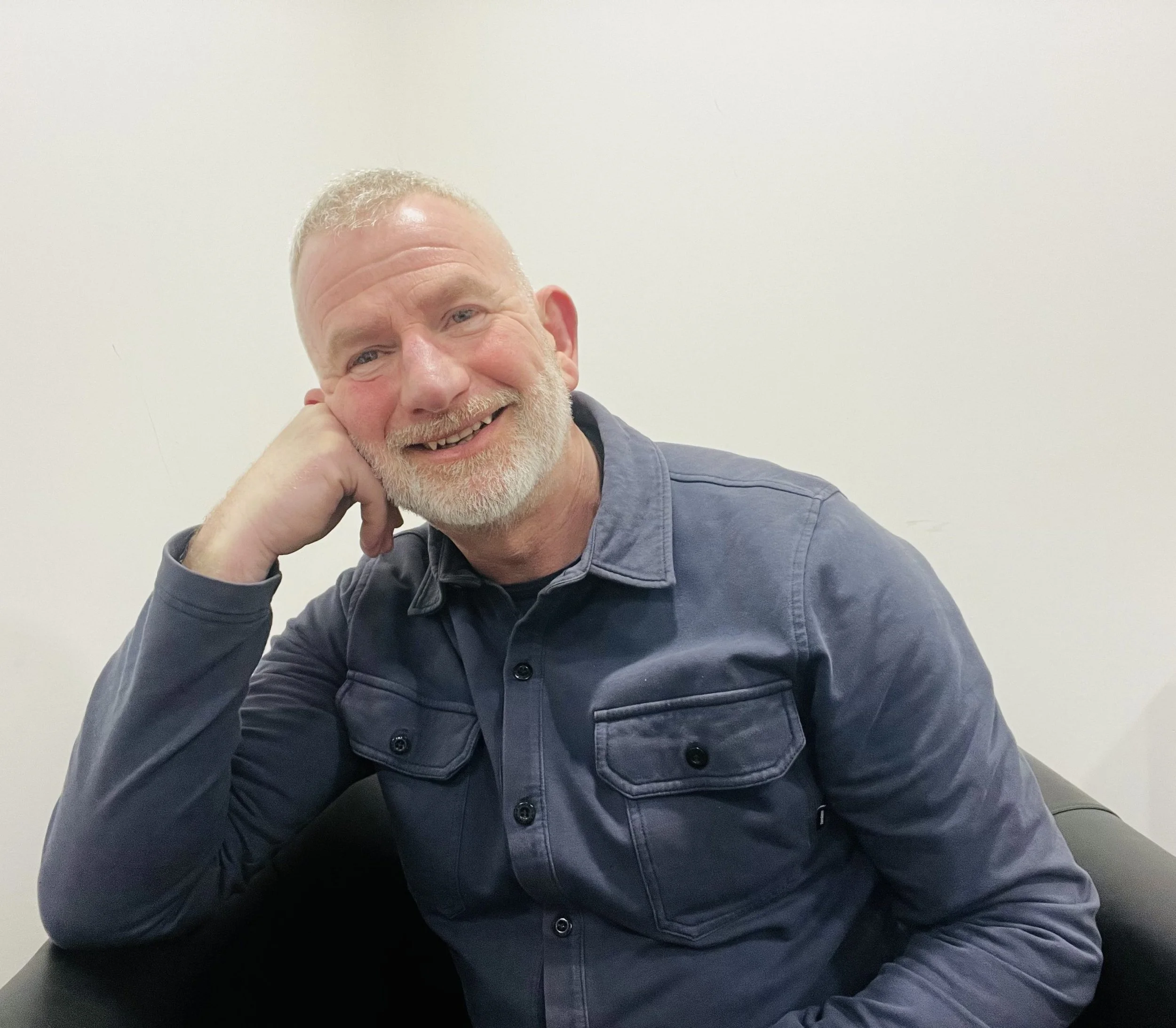
Bill Paterson is a long-standing member of the Mindfulness Association, beginning his journey in 2011 and completing the Mindfulness-Based Living (MBLC) Course teacher training in 2017. He has undertaken extensive study in mindfulness, compassion, insight, supervision, and person-centred approaches, and has taught the MBLC to more than 60 diverse groups across Scotland in the public, private, and third sectors.
In this episode, I talk with Bill about his lived experience of a, and how it shapes both his teaching and his therapeutic work in the world.
-
In 2017, Bill developed a Fife-wide mindfulness-in-schools project - later adopted by Fife Education and supported by Fife CAMHS - and in 2019 played a key role in launching Mindful Nation Scotland at the Scottish Parliament.
He now integrates his mindfulness and compassion training into his counselling work, offering walk-and-talk therapy in natural settings. Bill has also published research exploring how mindfulness and compassion training influence men’s perceptions of masculinity.
-
-
1. Leverage the Power of a "Soothing Voice"
Bill notes that his first encounter with mindfulness was through John Kabat-Zinn’s voice, which he found incredibly soothing. As a teacher, your vocal tone is a tool for regulation. A calm, grounded voice can be the first step in helping a student’s nervous system relax before they even begin the mental practice.
2. Move from "Head" to "Body"
Especially when working with academics or professionals, recognise that they are often "all in their heads." Bill emphasises that practices like the body scan are vital because they provide evidence that "the hands are okay, the feet are okay," which helps settle the unsettled mind.
3. Use the "Common Sense" of Language
Drawing from his PhD research on Antonio Gramsci, Bill highlights how language creates our "norm." As a teacher, be mindful of the language you use. To reach people who might be sceptical (the "non-tree-huggers"), use accessible, non-religious language that resonates with their everyday reality.
4. Foster the Feeling of Being "Held and Heard"
Bill identifies that all human beings seek two things: to be held and to be heard. A teacher’s job is not just to deliver instructions, but to create a relational space where students feel seen and safe. This "holding space" is often more transformative than the meditation technique itself.
5. Create a "Common Language" for Mental Health
When Bill worked with schools and CAMHS (Child and Adolescent Mental Health Services), he insisted on teaching teachers, parents, and students simultaneously.
The Lesson: By giving everyone a shared vocabulary for anxiety, sadness, and presence, you create a support network rather than an isolated practice.
6. Integrate Mindfulness with Movement
Bill’s background in Tai Chi and Qigong taught him that the body is the "interface" for the mind. For many, especially those with high energy or "ultra-masculine" backgrounds, sitting still is difficult. Incorporating movement helps bridge the gap between physical action and mental stillness.
7. Take the Practice Into Nature (Eco-Therapy)
One of Bill’s most successful adaptations is "Walk and Talk" therapy.
The Lesson: You don't need a quiet room to teach. Practicing in the elements-facing the wind, rain, or sunshine-helps students relate to their internal "weather" and fosters a sense of awe and the sublime.
8. Be "Non-Directive" When Necessary
Through his counseling training, Bill learned the value of "getting out of the way." While a teacher must guide a practice, they must also allow space for the student’s own experience to emerge without over-instructing or "fixing" them.
9. Recognise "Full Catastrophic Living"
Bill came to mindfulness during a period of redundancy, injury, and anger. Teachers should validate that mindfulness isn't just for calm moments-it is specifically designed for "the long probation periods of life," shame, and physical pain. Meet students where their struggle is most "brutal."
10. Understand the "Silence, Stillness, and Spaciousness"
Bill summarises the core of the practice into these three qualities. A teacher should aim to help students find:
Silence: Quietening the internal monologue.
Stillness: Settling the physical and emotional reactivity.
Spaciousness: Creating room so that they are no longer "trapped" by their thoughts.
-
1. The "Full Catastrophic Living" (The Broken Machine)
Bill uses Kabat-Zinn’s phrase to describe his life when he was hit by redundancy, a newborn baby, and a spinal injury simultaneously.
The Imagery: He describes himself as "absolutely broken," unable to stand, sit, or walk.
The Lesson: Mindfulness isn't just a relaxation tool; it is a way to "re-assemble" a life that has completely shattered. It provides a way to be with a body that feels like it has failed you.
2. The "Paratroopers" (Levels of Care)
When describing the mental health system (CAMHS), Bill calls them the "paratroopers."
The Imagery: Paratroopers are elite forces dropped into the most severe, high-intensity conflict zones.
The Lesson: He argues that if you teach mindfulness in schools and to parents (preventative care), you don't need to call in the "paratroopers" for every case. Mindfulness serves as the "ground troops" that prevent the crisis from escalating to an emergency.
3. "All in My Head" (The Ghost in the Machine)
Bill describes the academic life as being "all in my head".
The Imagery: A person who exists only from the neck up, disconnected from the physical reality of their body.
The Lesson: He uses the Body Scan as the antidote-a way to "drop down" from the attic of the intellect into the "ground floor" of physical sensation.
4. The "Common Sense" (The Invisible Script)
Drawing on the philosopher Gramsci, Bill speaks about "Common Sense" as a metaphor for power.
The Imagery: A set of rules or a "norm" that is so pervasive we don't even see it as a choice; it’s just "the way things are."
The Lesson: Meditation helps students identify their own internal "Common Sense"-the habitual, self-critical thoughts they’ve accepted as "the truth" for years-and realise it is actually just a narrative that can be questioned.
5. "Zombie" vs. "Tai Chi" (The Window Barrier)
Bill shares a humorous story of practicing Tai Chi in the garden while his kids watched through the window, pretending to be zombies and saying, "I am a zombie, push down the button."
The Imagery: The glass window separating the "stillness" of his practice from the "chaos" of family life.
The Lesson: This serves as a metaphor for the interface between our practice and the world. We don't meditate to stay in a bubble; we meditate so we can eventually "push down the button" on our own autopilot (zombie-like) reactivity when we step back inside the house.
6. The "Blue Light" (Mindfulness as Resilience)
Working with the Scottish Ambulance Service, Bill frames mindfulness through the "Blue Light" metaphor.
The Imagery: The flashing lights of an emergency vehicle.
The Lesson: For first responders, mindfulness isn't about "peace"; it’s about resilience. It is the "internal shock absorber" that allows a person to witness trauma and then reset their nervous system so they don't carry the "Blue Light" emergency home with them.
7. The "Walk and Talk" (The Parallel Journey)
Bill’s shift to eco-therapy turned the traditional "room" therapy into a "walk."
The Imagery: Two people walking side-by-side in the forest rather than sitting face-to-face in a clinical room.
The Lesson: This metaphorises the non-directive nature of his work. The teacher/therapist isn't a "judge" behind a desk; they are a companion on a path. The forest (nature) becomes a third "teacher" in the room.
8. "The Mirror of the Elements"
Bill talks about meditating outside in "all weathers."
The Imagery: Sitting in the rain, wind, and sun of Scotland.
The Lesson: The external weather is a metaphor for our internal emotions. Just as we don't try to "stop" the rain, we learn through mindfulness not to "stop" our sadness or anger, but simply to sit with it until the weather changes.
-
Find out more about Bill’s work here.
On the Cushion with Karen Atkinson

As founder and CEO of MindfulnessUK, Karen leads its growth and development while pioneering innovative initiatives. Author of Compassionate Mindful Inquiry in Therapeutic Practice (2020), she previously chaired the British Association of Mindfulness-Based Approaches (BAMBA) and remains an active member.
In this episode I talk with Karen about how she came to mindfulness and how her background influences her facilitation of mindfulness.
-
MindfulnessUK is a BAMBA and EAMBA-affiliated training organisation, with courses regulated by the CPD Standards Office. Karen, an Honorary Lecturer at Queen’s University, Belfast, began her mindfulness journey in her 20’s as a way of managing the suffering experienced as a result of insidious trauma throughout her childhood.
A yoga teacher with the British Wheel of Yoga, she deepened her self-compassion practice during cancer recovery in 2013 and, when diagnosed with her second primary cancer in 2023, responded with deep self-kindness and equilibrium. These experiences empassion Karen to deliver trauma-informed teaching and training globally and she has become an acknowledged specialist in her field.
-
-
1. View Yourself as a "Facilitator," Not a "Teacher"
Karen expresses unease with the traditional teacher-pupil hierarchy. She prefers the term facilitator, viewing the process as "we are all in this together." This creates an egalitarian space that fosters trust and safety.
2. Prioritise "Embodied" Teaching Over Scripts
Karen refuses to sell meditation scripts. She believes that the power of teaching comes from the facilitator’s own embodied experience. Students can sense the depth of a facilitator's personal practice, and this presence is what makes the teaching transformational.
3. Integrate Compassion as a Core Foundation
For Karen, mindfulness without compassion is out of balance. She argues that "dropping into the present moment" can be difficult if we don't have the tools of self-kindness to handle what we find there. Teachers should ensure that compassion practices are interwoven into every mindfulness curriculum.
4. Meet People Where They Are (Differentiation)
Don't superimpose a "blueprint" on everyone. Karen emphasises differentiation-adapting practices to the specific needs of the group. This is especially vital for "hard-to-reach" communities or those for whom traditional 40-minute meditations are not accessible.
5. Use Shorter Practices for Accessibility
Karen has been a pioneer in advocating for shorter practices. She notes that for many people-especially those in high-stress healthcare roles or those dealing with illness-shorter, "bite-sized" meditations are more effective and easier to integrate into a busy life than long, traditional sittings.
6. Balance the "Curriculum" with "Intuition"
While having a theme or learning objective for a session is important, a facilitator must be ready to "throw away the plan" if the room feels agitated or dull. Karen describes this as holding the curriculum in one hand and intuition and flexibilityin the other.
7. Use Personal Practice for "Regulating the Group"
When a group becomes distressed or agitated, the facilitator should bring themselves back to their own body and groundedness. By calming your own nervous system, you serve as a "baseline" that helps settle the collective energy of the room.
8. Understand the "Nervous System" Context
With her nursing background, Karen views mindfulness as a tool for nervous system regulation. Understanding how the body holds trauma or stress helps a teacher explain why mindfulness works on a "cellular level," making the practice feel more grounded in science and less "mystical."
9. Ensure a Thorough Assessment Process
To prevent mindfulness from "going horribly wrong," Karen insists on a robust assessment of participants before they begin a course. This helps identify "red flags" and ensures that the student is ready for the depth of the work, protecting both the student and the facilitator.
10. Stay Committed to "Continuous Learning"
Karen views the relationship between teaching and practicing as a "virtuous cycle." Even with decades of experience, she remains a student, continuing to be taught and trained. This keeps her teaching "fresh" and prevents it from becoming stagnant or repetitive.
-
1. The "Homecoming"
Karen uses this phrase to describe the immediate sensation of beginning a meditation or yoga practice.
The Imagery: Returning to a safe, familiar, and grounded house after being lost or out in the elements.
The Lesson: For someone with a "dysregulated nervous system," the body can feel like a foreign or hostile place. Mindfulness is the process of "coming home" to yourself, where you feel balanced, earthed, and connected.
2. The "Soothing Balm"
She describes the sensation of open awareness as a physical ointment.
The Imagery: A cooling, healing lotion applied to a burn or a wound.
The Lesson: When the nervous system is "on edge" or reactive, mindfulness acts as a balm that softens the internal tension and soothes the "heat" of stress and anxiety.
3. "Drawing a Line" (The Choice Point)
This is Karen’s primary metaphor for the power of the present moment.
The Imagery: Physically drawing a line in the sand or on a page.
The Lesson: One side of the line is the past-your ingrained patterns, dysfunctional upbringing, and habitual reactions. By dropping into the present, you "draw the line," creating a spaciousness that offers you the choice to respond differently rather than simply repeating the past.
4. The "Cellular" Way of Being
Karen notes that mindfulness is more than just a skill; it becomes "cellular in nature."
The Imagery: Something that isn't just a layer on top of the skin, but is part of the very DNA and atoms of the body.
The Lesson: With consistent practice, mindfulness stops being something you do and becomes part of who you are. It alters your "direction of travel" at the most fundamental level of your biology.
5. The "Full Circle"
She describes her journey from secular yoga to complex breathwork, into Buddhism, and back to simplified mindfulness as a circle.
The Imagery: Walking a long path only to return to where you started, but seeing it for the first time with total clarity.
The Lesson: You often start with simple practice, go through a "complex" phase of learning theory and lineage, and eventually return to simplicity-but this time, you are "informed and knowledgeable" rather than just doing it by rote.
6. The "Imbued" Teacher
Karen describes her relationship with Buddhist lineage as something that "imbues" her secular teaching.
The Imagery: Like a piece of cloth soaked in a dye or a scent; the original substance isn't visible, but its essence is present in every fiber.
The Lesson: Even when teaching in a strictly secular environment (like a hospital or a bank), a teacher’s deep personal study of lineage "imbues" their presence. Students can sense the "scent" of that depth even if the teacher never mentions it.
7. The "Virtuous Cycle"
This metaphor explains her motivation for continuing to work and train others.
The Imagery: A wheel that gains energy and "glow" as it turns, rather than wearing out.
The Lesson: Teaching and training feed back into the teacher's own practice. It is a "continuous learning" loop where the act of giving to others refills the teacher’s own "inner glow."
8. The "Establishment" and "Redressing the Balance"
Karen speaks about the early days of mindfulness training where compassion was often missing.
The Imagery: A set of scales that was tipped too far toward "clinical mindfulness" and away from "warm-hearted compassion."
The Lesson: Her mission was to redress the balance, ensuring that the "cold" clarity of mindfulness was paired with the "warm" support of compassion.
-
Find out more about Karen’s work here.
On the Cushion with Suryacitta

Suryacitta Smith has been practising meditation since 1989 and teaching since 1997. He is the author of five books on meditation and happiness.
After many years of practising and teaching mindfulness, he recognised that it did not fully address the root of human psychological suffering - the central concern of the Buddha’s teaching.
In this episode we explore Suryacitta’s background and influences, and his inspirational approach to teaching meditation.
-
Around a decade ago, Suryacitta was drawn to the understanding of non-duality, which he describes as the missing piece of the puzzle.
This perspective now deeply informs his work, which is characterised by directness, simplicity, and a continual pointing beyond conceptual understanding.
-
-
1. Aim for Radical Simplicity
Suryacitta emphasises that the most profound teachings are direct and simple. If a teaching is too complex, the mind tries to "figure it out," which creates more chatter. Teachers should point students to the absolute immediacy of their current experience-like the feeling of the chair-rather than searching for a "big experience."
2. Move from "Mind" to "Presence"
He suggests that "mindfulness" is a poor translation because it contains the word "mind." He prefers the words Presence or Being. As a teacher, help your students understand that they are looking for what is behind or prior to the thought (awareness), not the content of mind.
3. Dismantle the "Storyteller"
The core of Suryacitta's philosophy is that humans suffer because of the internal "narrator" or "storyteller."1
The Lesson: Help students see that they are not the voice in their head. The voice is just a "commentator" on reality, not reality itself. When the storyteller goes quiet, the joy of life (which is innate) is revealed.
4. Use "Permission" as a Diagnostic Tool
A key technique Suryacitta uses is asking: "Did that thought ask permission to arise?" * The Tip: By guiding students to realise that thoughts arise unbidden and unchosen, you help them break their identification with those thoughts. This allows them to lose interest in the "mental noise."
5. Practice "Neutral Noticing"
Teachers should encourage a neutral, non-judgmental observation of the mind. Adding a judgment like "I shouldn't be thinking this" is just another thought. Use the phrase "I’m having the thought that..." to create a healthy distance (diffusion) between the student and the content of their mind.
6. Focus on "Losing" Rather than "Gaining"
Most students come to meditation wanting to gain something (peace, clarity, focus). Suryacitta flips this: Meditation is about losing-losing the identification, losing the labels, and losing the self-centered storylines.
7. Distinguish Between the "Screen" and the "Movie"
Use the metaphor of the TV screen and the movie.
The Lesson: Students are usually enthralled by the "movie" (the drama of their thoughts). Your job is to point them back to the "screen" (Awareness/Presence). The screen is always there, even when the movie is tragic or frightening.
8. Challenge the "Labels"
Suryacitta describes labels (like "I am an anxious person") as post-it notes pinned to the self.
The Tip: Ban the use of self-limiting labels in your sessions. Encourage students to see themselves as a "person" experiencing a "thought of anxiety" rather than being the anxiety itself.
9. Master the Use of Metaphor
Suryacitta is a master of metaphors (the Ghost Train, the Jewel, the blind dog Banky).
The Tip: Create or use relatable metaphors to bypass the logical mind.
10. Repeat, Repeat, Repeat
He admits to being repetitive. Because the "Papancha" (mental momentum) is so strong, a teacher must be willing to repeat core truths in slightly different ways until they penetrate the student's identification with the mind.
-
1. The "Ghost Train" (The Mental Ride)
Suryacitta compares our psychological life to a theme park ride.
The Imagery: Entering a dark tunnel where skeletons and ghosts (fears, regrets, anxieties) jump out at you.
The Lesson: We treat these mental "jump scares" as reality, calling it "my life." He suggests that mindfulness allows us to see that we are just on a mental ride. Once you realise it's a ghost train, you can stay on the seat without being truly terrified, or even "get off the train" to see how the mechanics of the ride work.
2. The "TV Screen vs. The Movie"
This is his primary metaphor for understanding Awareness.
The Imagery: When you watch a movie, you are so enthralled by the drama that you "miss the screen."
The Lesson: The movie represents our thoughts and stories; the screen represents our Presence. No matter how violent or sad the "movie" in your head is, it never stains or damages the "screen." When the "TV" (the mind) turns off, the screen remains untouched and still.
3. The "Post-it Note" Labels
He describes self-limiting beliefs as physical stickers we place on ourselves.
The Imagery: Writing "Anxious," "Useless," or "Bad at Art" on a post-it and pinning it to your chest.
The Lesson: We eventually stop seeing the person and only see the labels. Mindfulness is the process of peeling off these labels to reveal the True Self underneath, which is none of those things.
4. "Banky" (The Blind Dog)
Suryacitta uses his blind Border Collie, Banky, as a living metaphor for a mind without "story."
The Imagery: A dog that lost its sight in a single day but still runs through fields with joy.
The Lesson: Banky doesn't have the word "blind," so in a sense, he isn't blind; he is just living. He doesn't tell himself a story about "I used to be able to see." He misses the ball 15 times, but the 16th time is fresh and new because he isn't carrying the story of his failure.
5. The "Soap Bubble"
He uses this to describe the lifespan of a thought.
The Imagery: A shimmering bubble floating in the air.
The Lesson: A thought has very little "mass." If you don't "feed" it energy or try to grab it, it will eventually just pop on its own. It is only when we identify with the "content" of the bubble that it feels all-encompassing.
6. The "Language You Don't Understand"
A thought-experiment metaphor for the internal monologue.
The Imagery: Imagine if your "chatter" suddenly switched into a language you don't speak, like German or Chinese.
The Lesson: You would realise the sounds are meaningless. This reveals that the suffering is in the belief in the words, not the words themselves. If the narrator is speaking a language you don't understand, the "threat" vanishes.
7. "Dust in the Eyes"
A classic Buddhist metaphor Suryacitta uses to explain why some people "get it" faster than others.
The Imagery: Walking through life with a thin layer of grit or dust obscuring your vision.
The Lesson: Some of us are more "mind-oriented" or "identified" with our thoughts. This "dust" makes it hard to see the simple truth that is already here. Practice is simply the act of clearing the dust.
-
Find out more about Suryacitta’s work here.
On the Cushion with Andy Wistreich
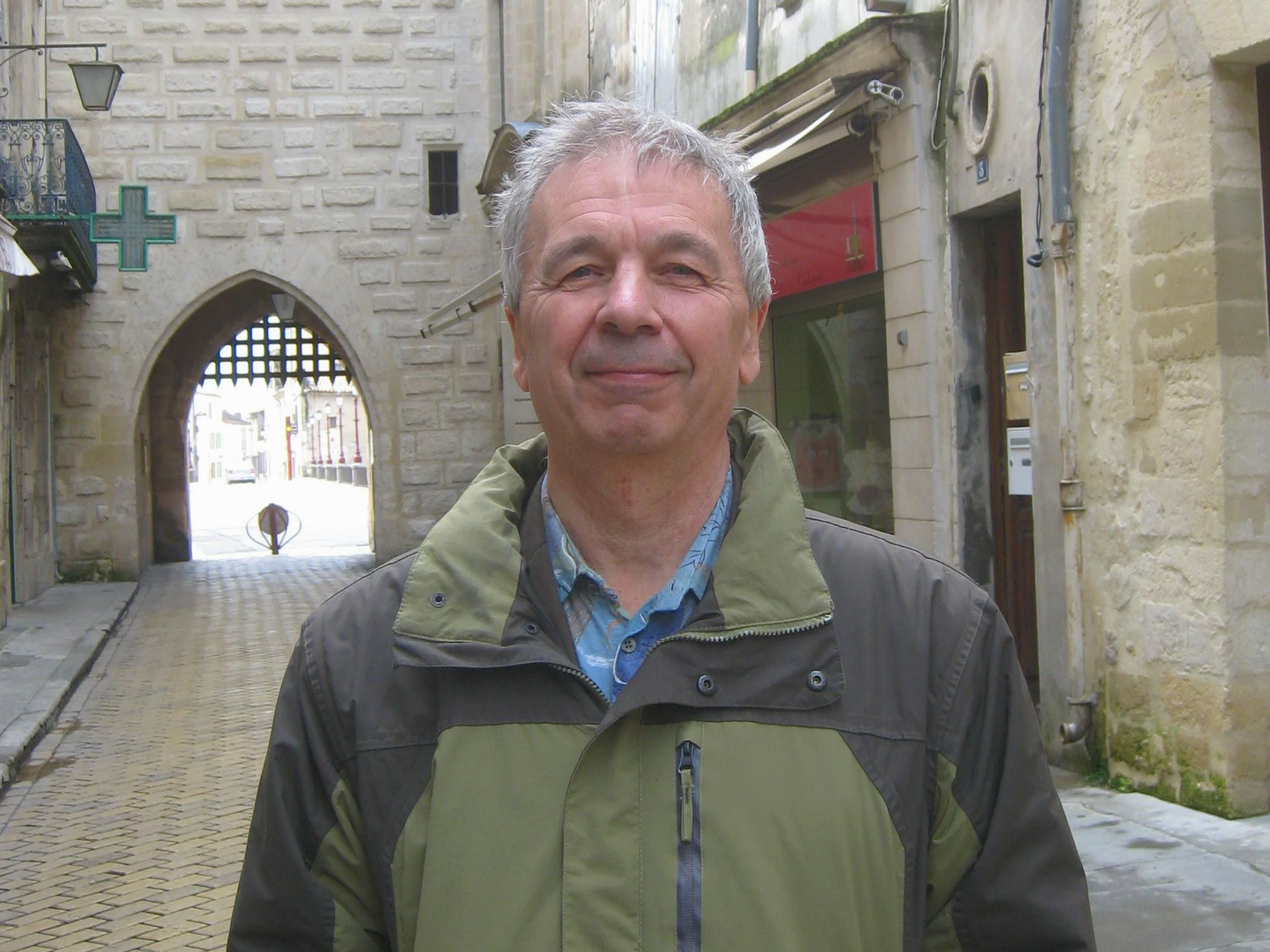
Andy Wistreich has been teaching Buddhist meditation and leading retreats around the world for the past 45 years, within the Tibetan tradition.
He has been encouraged to teach by his own teachers, who are mostly Tibetan lamas. In his mid-seventies he lives in Somerset with his wife Shan Tate, with whom he often co-leads courses and retreats.
In this podcast episode we explore Andy’s background and influences, and his enduring commitment to teaching meditation.
-
Trained as a Further Education teacher, and having studied learning and teaching in a masters in education, Andy also trains Buddhist teachers within the Foundation for the Mahayana Tradition. His approach to this is dialogical, based on the understanding that the teacher's role is to facilitate learning, such as through meditation.
-
-
1. Shift from "Teacher" to "Facilitator"
Andy advocates for a constructivist model of education. Instead of seeing yourself as the source of all knowledge (the transmission model), view your role as providing the information and guidance that allows students to construct their own awareness and understanding.
2. Treat Practice as "Nutrition for the Mind"
Andy describes his daily practice as the mainstay of his life. He suggests that teachers should present meditation not just as a tool for crisis management, but as essential daily nutrition that enables us to deal with the challenges of being alive and getting older.
3. Beware the "Mask of the Teacher"
One of Andy's most profound realisations was that he had been wearing a "mask" projected onto him by students. He warns teachers to be wary of their own egos and the "expert" persona. Stay authentic by remaining an "ordinary person" rather than becoming a creature of your professional role.
4. Practice While You Lead
Andy’s teacher, a Tibetan Lama, gave him the simple advice: "You practice yourself." * The Tip: When leading a meditation, you should be meditating as deeply as possible at the same time. This creates a genuine heart-to-heart communication that students can intuitively pick up on.
5. Meditate from the "Heart Space," Not the Brain
Andy recommends guiding students to focus their awareness within the rib cage-the heart space-rather than the brain. He believes this helps shift understanding from a purely intellectual level (the head) to an intuitive, felt level (the heart).
6. Act as a "Catalyst," Not a Creator
When students have amazing experiences, they often credit the teacher. Andy’s tip is to explicitly state: "I didn't give you this experience; I was just the catalyst." Remind students that the wisdom and the experience came from within them, reinforcing their own agency and "Buddha nature."
7. Embrace Humility and Service
For Andy, teaching is an act of service, akin to a house cleaner doing a necessary job for someone else. Humility means having deep respect for the student's potential. If it ever feels like the students are there to serve the teacher’s ego, the relationship has become "yucky" and corrupt.
8. Use "Circles" to Draw Out Inner Wisdom
Drawing on his drama teaching roots, Andy suggests using discussion circles where everyone is equal. He was "blown away" by the wisdom that emerged from people who had never studied Buddhism, proving that if you hold the space correctly, the group can often teach itself.
9. Move Understanding from "Head to Heart"
A teacher’s job is to help students filter intellectual concepts so they become intuitive. This is the difference between sharing words (the head) and sharing realisation (the heart). The deeper your own heart-centered practice, the more authentic your communication will be.
10. Adapt the Pedagogy to the Culture
While Andy respects his Tibetan lineage, he acknowledges the need to invert the hierarchy for Western students. Teachers should feel free to adapt traditional, rigid structures into freer, more conversational formats that suit the modern environment without losing the essence of the teaching.
-
1. "Nutrition" (Mindfulness as Food)
Andy describes his 45-year daily practice as the "mainstay" of his life using a biological lens.
The Imagery: Meditation as the "nutrition of the mind."
The Lesson: Practice is not just a medicine you take when you are sick (in crisis); it is the daily food required for the mind to remain healthy and resilient enough to handle "the challenges of being alive."
2. The "Mask of the Teacher"
This is Andy’s most personal metaphor, describing the psychological burden of leadership.
The Imagery: A physical mask that is both worn by the teacher and projected onto them by the students.
The Lesson: The role of "Expert" or "Teacher" can become a rigid persona that traps the individual. He realised he wanted to be free of the mask to become an "ordinary person" again, moving from a role-based identity to an authentic one.
3. The "House Cleaner" (Service and Humility)
To explain the lack of hierarchy in his teaching, Andy uses a domestic service metaphor.
The Imagery: Someone who comes to your house to clean the toilets or the floors.
The Lesson: A meditation teacher is a servant. They are doing a job for the student, providing a service that helps the student's internal "house" stay in order. It is an ordinary, humble task, not a reason for ego or a "throne."
4. The "Catalyst"
Andy uses this chemical metaphor to describe the teacher’s influence on a student's breakthrough.
The Imagery: A substance that triggers a chemical reaction without being the source of the materials.
The Lesson: When a student has a profound realization, the teacher is just the catalyst. The "chemicals" (the wisdom and potential) were already inside the student; the teacher simply provided the spark to set them in motion.
5. "Head to Heart" (The Internal Descent)
This describes the progression of understanding within a practitioner.
The Imagery: Information physically moving from the brain down into the "heart space" (the rib cage).
The Lesson: Intellectual knowledge is "Head" knowledge-it is filtered and logical. Realisation is "Heart" knowledge-it is intuitive and embodied. He guides students to meditate from the chest area to facilitate this descent.
6. The "Bubble"
Andy refers to the specialised world of long-term practitioners as a "bubble."
The Imagery: A thin, transparent sphere that keeps the group safe but also separate from the world.
The Lesson: While the Buddhist "bubble" offers depth, Andy found it "healthy" to step outside of it and engage with ordinary, secular life to maintain his authenticity and avoid becoming a "creature of his own ego."
7. "Constructing" Knowledge
Drawing on his Masters in Education, Andy views the mind as a construction site.
The Imagery: Building a structure (knowledge) from the ground up using provided materials.
The Lesson: He rejects the "banking" or "transmission" model (pouring water into a jar). Instead, he sees the student as the architect. The teacher provides the "information and guidance" (the bricks and blueprints), but the student must build the awareness within their own mind.
8. The "Inner Experience" Circle
The Imagery: A circle of people sitting as equals, where the "center" belongs to the topic (like love or death) rather than a person.
The Lesson: The circle represents the non-hierarchical nature of wisdom. It demonstrates that wisdom is already "buried" in everyone (the Buddha Nature), and the group structure simply "removes the layers" to let it out.
-
Check out Andy’s YouTube channel here.
Inside Mindfulness with Mike Pratt

Mike Pratt is a Northeast England-based conservationist, author, and CEO of the Northumberland Wildlife Trust with nearly 40 years of environmental experience.
Through his platform, Living Mindfully Wild, he integrates his expertise in nature protection with over 20 years of teaching "energy movement" (Tai Chi and Chi Kung) to promote both personal wellbeing and ecological health, inspiring a deeper, more spiritual connection to the natural world by encouraging everyone to protect our fragile, precious wild environments.
-
Mike describes himself as a "naturalist writer" who is primally inspired by northern landscapes. He uses writing, drawing, and speaking to express the "magic and wonder" he finds in nature and to inspire others to protect the natural world. He has published several books and pamphlets, including:
Infinite Wonder (2023): A celebration of wild places and the healing power of nature.
My Wild Northumbria: An exploration of the habitats and history of the ancient region of Northumbria.
WILD: A collection of essays and prose poems focused on wildlife in east Cleveland and the North Yorkshire coast.
North Facing: Poems and prose detailing experiences in northern wildernesses from Yorkshire to Scandinavia and Iceland.
Aftermaths: His latest work, described as prose and poetry about the deep connection between humans and nature.
-
-
1. Find "Space and Quietude"
Fulfillment doesn't come from professional status or "busy-ness," but from seeking moments of quiet. Mike suggests even a "momentary nip outside" during the chaos of daily life to reconnect with something beyond yourself.
2. Move from "Naming" to "Sensing"
True nature connection isn't just about identifying species or "naming the parts." It is about acclimatisation - immersing yourself in the environment until you sense how every part of the ecology, including yourself, fits together.
3. Adopt an "Animistic" Perspective
Drawing from indigenous wisdom, Mike suggests viewing the world as entirely alive. When we see nature as an "animated entity" rather than an inanimate resource, we naturally shift from exploitation to a special, sacred relationship.
4. Become a "Connector," Not Just a Conservator
While conservation often focuses on protecting what is "out there," Mike’s mission is to help people "be more natural in their being." He views himself as a catalyst for reconnecting urbanised humans to their own biological evolution.
5. Cultivate "Awe and Wonder" Over Negativity
It is easy to be dragged down by the "negative street" of biodiversity loss. Mike teaches that focusing on the joy and wonder still present in the world is a more powerful motivator for change than grief or anger.
6. Nature is "Home," Not a Destination
Humans have evolved for 300,000 years to be linked to the natural environment. Mike reminds us that when we enter a woodland, our body chemistry changes because we aren't just visiting a park - we are "going home."
7. Use Writing as "Cognitive Therapy"
Mike uses poetry and prose to bring out thoughts and feelings he didn’t even know he had. He teaches that creative expression is a way to process the "internal landscape" alongside the external one.
8. Practice "Reciprocity" Over Ownership
We often talk about preserving nature for our future generations, which remains human-centered. Mike suggests a "two-way street" where we ask how we can nourish the thing that feeds us, moving from "custodianship" to a "reciprocal relationship."
9. Apply Mindfulness to "Jagged" Lives
Mindfulness isn’t just for the meditation cushion; it’s a framework for when life gets "sticky and painful." It doesn't stop the pain, but it provides a smoother way to work through the unpredictable challenges of the modern world.
10. Listen to the "Mind of the Heart"
Aligning with Taoist and Eastern philosophies, Mike suggests that the heart, not the head, is the true center of emotion and decision-making. In a world that uses the "head too much," returning to the heart allows for a deeper, non-dual connection to the "is-ness" of life.
-
1. The "Overcoat" of Modernity
Mike describes our urbanised, disconnected lifestyle as wearing "overcoats" or "layers of shells." He suggests that mindfulness and nature immersion are the process of "taking off the overcoat" to reveal our "natural selves." This metaphor implies that our connection to nature isn't something we need to build, but something that is already there, currently hidden by the weight of modern society.
2. "Going Home"
He repeatedly refers to entering a woodland or a wild space as "going home." This reframes nature from a "leisure destination" or a "resource" into a place of biological and spiritual belonging. It suggests that our bodies recognise the forest as their original, rightful habitat, triggering an immediate shift in chemistry and comfort.
3. The "Two-Way Street" of Reciprocity
Instead of the traditional "custodian" or "owner" model of conservation, Mike uses the metaphor of a "two-way street." This shifts the relationship from a one-sided human management of the land to a "proper relationship" where humans and nature nourish one another equally.
4. The "Internal Landscape"
When discussing his poetry, Mike speaks of the "internal landscape" being just as important as the external one. This metaphor suggests that our minds and emotions have their own topography - forests, rivers, and weather systems - that can be mapped and understood through the lens of the natural world.
5. Nature as a "Beating Heart"
While describing his time in a small cabin during a stressful period of family illness, he calls the cabin the "beating heart of this woodland." This metaphor transforms a simple structure into a living, rhythmic center of healing and observation, emphasising that even in the midst of human grief, we can find a pulse of life to sync with.
6. "Waves" of Influence
Mike acknowledges that while an individual can only influence themselves, he believes we "start waves out" from that center. This uses a water metaphor to describe how personal mindfulness and a "natural state of being" can ripple outward to influence politicians, communities, and the planet at large.
7. Humans as "Gatherers of Experience"
He suggests that humans have evolved to be "un-gatherers" (specifically gatherers of experience and samples of the world). He notes that we have "all the gear" for this, metaphorically describing our senses and biology as a specialised kit designed for deep engagement with the earth.
-
Check out Mike’s website here.
On the Cushion with The Little Company of Calm

Three friends, Joe Glancy, Liz McEvoy and Andrew Carton together make up The Little Company of Calm. Based in Sunderland, UK, they offer mindfulness courses, activities, and retreats for the public and organisations. As a community interest, not for profit company, they endeavour to provide affordable and high quality mindfulness provision for their local area.
In this episode, we dive into their individual journeys, the shared philosophy that binds their teaching, and their big-picture vision for a more mindful society.
-
The discussion highlights the importance of accessibility, community engagement, and the transformative power of mindfulness in addressing mental health challenges. The team shares insights on their influences, teaching methodologies, and the significance of authenticity in their practice, ultimately emphasising the need for mindfulness to become a mainstream aspect of daily life.
Meet the Team
Liz McEvoy: Based in Sunderland, Liz has been a dedicated Mindfulness Teacher for over eight years. Her journey began in the early 90s while traveling the world; witnessing cultures where meditation was a seamless part of daily life left a lasting impression. Later, through her work in secondary education and deprived communities, she saw first-hand how these practices could anchor people through life’s inevitable ups and downs. Today, she is particularly focused on Mindful Self-Compassion, driven by a mission to make mindfulness accessible to everyone, regardless of their background or postcode.
Joe Glancy: Joe’s formal practice spans 15 years, with 12 years of experience as a teacher. His "entry point" was the Peace in a Frantic World program, which he initially applied to his role as a Workforce Development Coach in local government. For Joe, mindfulness was transformative; it helped him realise his struggles weren't unique, provided tools to navigate social anxiety, and revealed an "inner well of peace" that is always accessible. Trained through Bangor University and the Mindfulness Network, Joe is a BAMBA-qualified teacher who views the evolution of The Little Company of Calm as a deepening practice in itself.
Andrew Carton: Andrew’s interest in mindfulness was similarly sparked by the Finding Peace in a Frantic World philosophy, leading him to complete the Foundation course in Mindfulness at Oxford University. He teaches a wide range of programs, from Mindfulness-Based Cognitive Therapy (MBCT) to introductory tasters. Andrew brings a unique physical dimension to the group through his passion for Mindful Movement, specifically the practice of Chi Kung. He is committed to the UK good practice guidelines and works alongside Liz and Joe to help the local community improve their health and well-being through intentional living.
-
-
1. Accessibility is the Primary Mission
The trio is driven by the belief that mindfulness should not be an "elite" or "luxury" pursuit.
Economic Inclusivity: They use "Pay-As-You-Can" models to ensure financial status isn't a barrier.
Cultural Relevance: They actively take mindfulness out of "zen" studios and into the community (Salvation Army, Carer Centers, Social Housing).
The "Workplace Transition": Joe and Liz’s backgrounds in local government and education allow them to "translate" complex concepts into language that resonates with busy, working-class populations.
2. Pedagogical Style: Experiential & Embodied
Their teaching isn't just about theory; it’s about the felt experience.
"Stand the Troops Down": They use powerful metaphors to explain neuroscience. For example, describing the "no action needed" state as giving your nervous system permission to "stand down its troops."
The Power of Stillness: Liz emphasises that for people who "can't sit still," learning that stillness is allowed and not "self-indulgent" is a radical, life-changing shift.
Integrated Movement: Andrew champions Chi Kung as a "preventative medicine" and an accessible entry point for those with limited mobility or hyperactive minds.
3. The "Translation" of Neuroscience
They use science not to complicate, but to validate the practice:
The "Under the Bonnet" Metaphor: You don’t need to be a mechanic to drive a car, but understanding the engine helps. They use neuroscience to explain why the brain predicts the next moment and how mindfulness interrupts that loop.
Evidence-Based Foundations: They lean on established curricula like Finding Peace in a Frantic World and Mindfulness-Based Cognitive Therapy (MBCT).
4. Nature as a Co-Teacher
They don't just teach about calm; they go where calm exists.
"Double Power": They combine mindfulness with nature (flora, fauna, and birdwatching) to create a sensory-rich environment that aids presence.
Sensory Grounding: Liz’s opening joy about the "warmth of the tea cup" reflects their teaching style: finding mindfulness in the immediate, physical senses.
From the final "quick-fire" round, their advice to new teachers can be summarised as:
Embrace Fallibility: Don’t try to be a "perfectly serene" guru. Modeling how you handle your own mistakes is more helpful to students than pretending to be flawless.
Less is More: Silence is a teacher. Avoid over-guiding; give students the space to simply be.
The Long Game: Mindfulness teaching is a lifelong personal practice first. You must embody the principles before you can guide others through them.
-
The founders of The Little Company of Calm use vivid, relatable metaphors to demystify mindfulness. They take the practice away from abstract spirituality and ground it in everyday logic.
1. Standing the Troops Down
The Context: Explaining the phrase "No action needed right now."
The Meaning: Joe uses this to describe the physiological shift from a state of "fight or flight" (reactivity) to a state of rest. When the mind realises there is no immediate threat or task, it sends a signal to the body’s nervous system to "stand the troops down" - releasing the tension and preparation for battle that we often carry unconsciously.
2. Looking Under the Bonnet
The Context: Explaining the role of neuroscience in mindfulness.
The Meaning: Andrew and Liz compare practicing mindfulness to driving a car. You don’t need to be a mechanic to drive, but understanding what is happening "under the bonnet" (the brain’s wiring and stress responses) gives you a deeper appreciation for how the vehicle works and helps you manage it better when things go wrong.
3. The Anchor
The Context: Describing Andrew’s presence within the team.
The Meaning: Liz describes Andrew as the "Anchor." In the often-turbulent sea of running a community interest company and teaching deep emotional subjects, his steadiness provides a fixed point that prevents the group from drifting or becoming overwhelmed by "great ideas" and risks.
4. Streams Leading to the Ocean
The Context: Reflecting on their diverse past careers (teaching, coaching, translating).
The Meaning: Joe and Andrew describe their previous professional lives as different "streams." While those jobs seemed separate at the time, they all eventually flowed into the same "ocean" - their current roles as mindfulness teachers. It suggests that no experience is wasted; everything converges to create their current expertise.
5. Deep as the Ocean
The Context: Joe’s first experience with the Frantic World program.
The Meaning: He uses this to describe the layers of the mind. While the surface might be choppy with thoughts and sounds, mindfulness allows you to drop below the surface to a place of "stability and clarity." It implies that peace isn't something you create, but something that is "always there" at the bottom of the ocean, beneath the waves.
6. A Workout for the Mind
The Context: Their vision for the future of society.
The Meaning: They compare mindfulness to going to the gym. Just as we accept that the body needs regular physical exercise to stay healthy and prevent injury, they view mindfulness as a "mental workout" that should be a mainstream, preventative habit for everyone.
7. Wintering
The Context: Liz’s favorite reading/concept.
The Meaning: Used as a metaphor for difficult periods in life or bouts of depression. Rather than fighting the "cold" or the "darkness" of a hard time, "wintering" suggests an appreciation for the season you are in - accepting that life has cycles of dormancy and retreat before growth can happen again.
8. The Guest House
The Context: Referring to the famous Rumi poem.
The Meaning: The mind is a guest house, and emotions (even the "spiteful" or "difficult" ones) are unexpected visitors. The teaching is to "entertain them all" rather than slamming the door on them. If you treat an emotion as a temporary guest, you don't have to become the emotion itself.
-
Find out more about The Little Company of Calm here.
Inside Mindfulness with Nicholas Buxton

Nicholas Buxton is an Anglican priest and the Chief Executive of the Society of the Sacred Mission, at St Antony’s Priory, a Christian spirituality centre in Durham, UK.
In this episode, Nicholas shares his journey as a writer and Anglican priest, exploring the significance of contemplative practices in his life. He discusses the intersection of Buddhism and Christianity, the importance of adapting teachings for diverse audiences, and the cultural reflections on spirituality in contemporary society.
-
Nicholas was previously a vicar of a parish in Newcastle city Centre, where he developed ‘Just Meditation – a simple, accessible and inclusive approach to the learning and practice of meditation – and founded the Newcastle Meditation Centre (which was sadly forced to close in 2020).
He has a PhD in Buddhist philosophy and is the author of a number of books about meditation and Christian spirituality, including Tantalus and the Pelican: exploring monastic spirituality today (2009), The Wilderness Within: meditation and modern life (2014), and Just Meditation: everyday meditation for everyone (2020).
-
-
1. Writing as a spiritual and creative discipline
Writing is both deeply satisfying and deeply difficult - sometimes flowing naturally, sometimes feeling like “wrestling with mud.”
His goal is to write for a wide audience, not just academics - making deep ideas accessible and useful in everyday life.
Writing is part of his vocation, not just intellectual work - it’s a way of serving others.
Key idea: Clarity and accessibility are moral and spiritual choices, not just stylistic ones.
2. Spirituality emerged from personal crisis and existential questioning
In his early 20s, Nicholas struggled with alcohol, drugs, and lack of direction.
This crisis prompted a search for meaning through travel, meditation, and spiritual traditions.
Intensive meditation practice in India and New Zealand became a turning point that transformed his life.
Key insight: Spiritual practice often begins not from comfort, but from suffering and disillusionment.
3. Meditation practice itself stayed simple - but its meaning evolved
His core technique hasn’t changed in 30 years:
Sitting quietly
Watching the breath
Repeating a prayer phrase or mantra
What changed:
Initially practiced within a Buddhist framework
Now practiced within a Christian contemplative framework
Important distinction:
Technique: same
Meaning and purpose: transformed
He now describes meditation as “Being present to the presence of God.”
4. Meditation is more than stress relief - it raises deeper existential questions
Nicholas emphasises a critical distinction:
Surface level:
Stress reduction
Anxiety management
Wellbeing
Deeper level:
Understanding the human condition
Understanding suffering
Exploring ultimate meaning and reality
His key argument: Without a deeper framework, meditation risks becoming just a coping tool.
5. Buddhism and Christianity share deep structural similarities
He argues they are more alike than people assume.
Both identify the same core problem:
Buddhism: Dukkha (unsatisfactoriness)
Christianity: Fall / sin
Caused by attachment and disordered desire.
Both aim at transformation and liberation.
This insight allowed him to embrace Christianity without rejecting Buddhism.
6. A powerful turning point: an unexpected Christian experience in India.
Despite identifying as atheist, he attended a small Easter service in India.
He experienced:
A profound sense of joy
Relief
Homecoming
He described it as:
“A weight lifting … a coming home.”
This became a foundation for his eventual path into Christian priesthood.
7. Spirituality is not private - it must express itself in the world.
He strongly rejects the idea that spirituality is purely personal.
He believes authentic spirituality must:
Change behaviour
Change relationships
Express itself in service
Become a vocation
This led him to become a priest.
8. Meditation is a doorway, not the destination.
His “Just Meditation” approach emphasises:
Simple
Inclusive
Accessible practice
But he stresses:
Meditation is the beginning, not the end.
The real questions come after:
What is reality?
What is suffering?
What is the purpose of life?
Who are we?
9. Spiritual traditions provide necessary depth and direction.
Nicholas argues that traditions matter because they provide:
Context
Meaning
Ethical framework
Understanding of human nature
Without this, meditation can become:
Shallow
Therapeutic only
Existentially incomplete
10. His life illustrates a core paradox: finding yourself requires losing your old identity.
He moved through:
Addiction
Atheism
Buddhism
Christianity
And eventually discovered:
“I am where I’m meant to be. I am who I’m meant to be.”
-
1. Writing as “wrestling with a lump of material”
Writing can feel like “wrestling with a mass of words… wading through mud.”
Meaning:
Creative and spiritual work is often difficult and resistant.
Insight emerges through effort, not just inspiration.
Growth is an embodied struggle, not purely intellectual.
2. Meditation as a “door”
Just meditation is “the door… what happens on the other side is the real question.”
Meaning:
Meditation is not the destination - it’s the entry point.
It opens into deeper existential and spiritual exploration.
Stress reduction is just the threshold.
3. Spiritual transformation as “coming home”
The Easter experience felt like “coming home.”
Meaning:
Spiritual awakening isn’t becoming something new.
It’s rediscovering something fundamental and already present.
It carries a feeling of recognition, not acquisition.
4. Meditation as “training the body to train the mind”
Meaning:
Mind and body are inseparable.
Stillness of mind requires preparation.
Spiritual practice is physical, not just mental.
5. Spiritual weight being “lifted”
Meaning:
Spiritual conflict creates psychological burden.
Insight brings lightness and relief.
Awakening is experienced somatically.
6. Meditation as “being present to the presence”
Meditation is “being present to the presence of God.”
Meaning:
Meditation isn’t about doing, but being.
Presence itself becomes the object.
Awareness meets reality directly.
7. Spirituality as something that must “cash out in the world”.
Meaning:
Spiritual practice must translate into behaviour.
Insight must become action.
Otherwise it’s incomplete.
8. Meditation as a “sticking plaster” (if used only for stress)
Meaning:
Meditation can temporarily relieve symptoms.
But may not address root causes.
Without deeper inquiry, it remains superficial.
9. His life path as a “journey”
Meaning:
Spiritual development unfolds over time.
It isn’t linear or planned.
It includes wrong turns and unexpected destinations.
-
Find out more about Nicholas:
On the Cushion with Margaret Fletcher

Margaret Fletcher has a great love and concern for our shared Earth. Margaret is the originator of the MBSR & EcoAwareness Project, bringing MBI teachers together to invite life on Earth into the span of embodied practice and into our teaching, all in love, care and service for our precious planet.
In this podcast episode we explore Margaret’s background and influences related to her work as a mindfulness teacher and teacher educator, and her inspiring vision for the field.
-
Margaret trained and was certified to teach MBSR through the Center for Mindfulness at UMass Medical School, where she also served as an MBSR Teacher and Senior MBSR Teacher Trainer. She trained with and is certified by senior trainers at Bangor and Oxford Universities in assessing MBSR teacher competency using the MBI-TAC tool, which she uses in mentoring mindfulness teachers. In 2019 Margaret co-founded East Coast Mindfulness with Rebecca Eldridge; Margaret continues to teach and train MBSR teachers through East Coast Mindfulness. Margaret holds a Master’s degree in Mindfulness Studies from Lesley University, and brings over two decades of experience in teaching meditation and mindfulness in corporate, small business, non-profit, church and community settings. As a member of the 2022-2023 Eco-Advisory Group with the BESS Family Foundation, she has found great collegiality, support and inspiration to offer contemplative practices as healing and wellness for the interconnected web of life on Earth.
-
-
1. Teach from embodiment, not performance
One of the strongest themes throughout the conversation is that mindfulness teaching is not about adopting a “mindful persona.”
Margaret says: “I refuse to adopt a mindful personality.” This is a profound pedagogical point. The invitation is:
teach from authenticity rather than role-playing
bring your actual humanity into the room
use your own vernacular, humour, gestures, energy, and style
embody the practice rather than imitate an idealised teacher identity
Teaching implication
Students respond most deeply to congruence, not perfection.
2. Mindfulness teaching Is relational transmission
Margaret repeatedly points toward moments in teaching that go beyond technique or curriculum.
She describes moments where:
the room becomes deeply attuned
everyone feels “on the edge of realisation”
something alive and unpredictable emerges
insight is transmitted non-conceptually
This aligns with the idea that:
good mindfulness teaching is not simply delivering content - it is creating conditions for shared awakening and relational depth.
Teaching implication
The most transformative moments often cannot be scripted.
Teachers need:
presence
sensitivity
courage
attunement
trust in emergence
3. Competency frameworks matter but they are not the whole story
Her reflections on the MBI:TAC are nuanced and valuable. Initially she found it intimidating: “too accurate a mirror”. Later she came to deeply respect it.
The key insight:
competencies are useful developmental scaffolding
they help teachers refine skill
they create shared language and standards
But:
frameworks cannot fully capture aliveness, transmission, authenticity, or depth of presence
Teaching implication
Use competency frameworks as:
developmental mirrors
reflective tools
supports for growth
Not as mechanistic scorecards.
4. Keep returning to beginner’s mind
One of the most practical teacher-training insights: “I’m still trainable.”
Margaret repeatedly emphasises:
humility
openness
willingness to be transformed
continual learning
She sees the best teacher trainees as those willing to:
return to student mind
let go of expertise identity
remain vulnerable to learning
Teaching implication
The moment teachers stop learning, their teaching narrows.
5. Teaching requires ethical and existential clarity
Margaret speaks often about “ethos.” She argues mindfulness teaching is never value-neutral.
Core values include:
care
compassion
non-harming
relationality
responsibility
dignity
authenticity
Importantly, she frames mindfulness not merely as stress reduction, but as:
transformation
awakening
relational intelligence
ecological belonging
Teaching implication
Teachers should continually reflect:
What is my ethos?
What vision of humanity is embedded in my teaching?
What am I implicitly encouraging?
6. Stress reduction may be the doorway but not the destination
A very important pedagogical insight. She says people often arrive for stress reduction:
and that is legitimate
healing matters
But she warns against limiting mindfulness to symptom management. Mindfulness can also invite:
deeper realisation
ethical transformation
connection
existential inquiry
ecological awareness
Teaching implication
Meet students where they are but do not underestimate the depth available.
7. Invite the earth into the classroom
Perhaps the most original contribution in the episode.
Margaret challenges teachers:
“Can you invite the earth into your classroom?”
Not as:
an add-on
a token loving-kindness phrase
a scripted ecological reference
But as:
a lived relational reality
an embodied awareness of interconnectedness
Examples she gives:
breathing as reciprocal exchange with nature
relational practice with the natural world
outdoor mindfulness
recognising humans as beings within ecosystems
Teaching implication
Mindfulness teaching may need to evolve: from individual wellbeing →
toward ecological consciousness and relational belonging.8. Teach what is alive for you
Margaret’s path evolved organically:
business
meditation
MBSR
teacher training
ecological awareness
She did not force a fixed identity.
Instead, she followed:
energy
resonance
what felt alive
what kept calling her
Teaching implication
Powerful teaching often emerges when teachers:
stop copying others
trust their own unfolding
allow their practice to evolve naturally
9. Real teaching involves creative risk
The Martha Graham quote she shares becomes almost a manifesto for teaching:
“Keep the channel open.” This links strongly to:
authenticity
creativity
courage
non-comparison
Teaching implication
Teaching mindfulness is not merely reproducing curriculum. It is:
an artistic act
a relational act
a creative act
a living act
10. Joyful responsibility
One of the most memorable phrases in the episode.
Margaret reframes responsibility not as burden, but as:
“joyful responsibility.”
This is especially important in:
ecological work
social healing
mindfulness teaching
leadership
Teaching implication
Teachers who embody grounded hope and meaningful responsibility may be more transformative than those teaching from fear or urgency alone.
Summary
Margaret presents mindfulness teaching not as the performance of calm expertise, but as an embodied, relational, ethically alive practice rooted in authenticity, continual learning, and ecological belonging.
-
.1. The Blowtorch
One of the strongest metaphors in the episode. Margaret describes awakening and teaching energy as:
“a blowtorch”
She then expands it:
it can be wide and messy
or refined and precise
practice is learning how to focus and deploy that energy skilfully
What it symbolises
spiritual intensity
transformative energy
responsibility
disciplined expression
refinement of insight
Teaching insight
Mindfulness is not passive relaxation - it can be powerful, disruptive, catalytic energy that must be integrated wisely.
2. “Hair on Fire”
She repeatedly describes periods of practice and training as: “hair on fire”
What it symbolises
urgency
existential longing
deep motivation
intense commitment
spiritual hunger
Teaching insight
Transformative learning often arises from deep existential need rather than casual curiosity.
3. The Teacher on the Mountain
Referring to her teacher Norman Scrimshaw: “Everybody should have their teacher on a mountain.”
What it symbolises
wisdom
perspective
retreat from conventional culture
archetypal guidance
pilgrimage
Teaching insight
Teachers are not simply instructors - they can function as symbolic anchors of depth and orientation.
4. The Stopcock on the Blowtorch
She says Norman: “opened up the stopcock on the blowtorch.”
What it symbolises
releasing dormant potential
opening channels of awareness
activating latent energy
Teaching insight
Great teachers often unlock something already present in the student.
5. “Universal Solvent”
Mindfulness/wakefulness is described as: “the universal solvent.”
What it symbolises
dissolving rigid identities
softening conditioning
loosening fragmentation
increasing interconnectedness
Teaching insight
Mindfulness is portrayed as a force that breaks down separateness and rigidity.
6. “Invite the Earth Into the Classroom”
Perhaps the central ecological metaphor. “Can you invite the earth into your classroom?”
What it symbolises
dissolving the human/nature divide
expanding mindfulness beyond individual psychology
ecological relationality
Teaching insight
Mindfulness teaching should not remain trapped inside human-centred frameworks.
7. The Edge of Realisation
She describes transformative group moments as: “everyone’s awareness on the edge of realisation.”
What it symbolises
liminality
emergence
threshold consciousness
collective attunement
Teaching insight
Deep teaching often happens at thresholds rather than through explanation.
8. Dancing to the Edge of Madness
Borrowed from Donald McCown’s description of flamenco dancers.
What it symbolises
ecstatic aliveness
surrender
intensity
creative edge states
transformative presence
Teaching insight
Powerful teaching contains vitality and unpredictability, not sterile control.
9. The Mirror (MBI:TAC)
She describes the competency framework as: “too accurate a mirror.”
What it symbolises
self-confrontation
vulnerability
developmental honesty
Teaching insight
Reflective frameworks can provoke discomfort because they reveal blind spots clearly.
10. Beginner’s Mind as Being “Trainable”
She says: “I’m still trainable.”
What it symbolises
humility
openness
flexibility
lifelong learning
Teaching insight
The healthiest teachers remain students.
11. “The Earth Knocking on My Door”
She says: “the earth… finally said, now me.”
What it symbolises
ecological awakening
vocation
calling
the more-than-human world demanding attention
Teaching insight
Ecological awareness becomes not an intellectual interest, but a summons.
12. Human Architectures and Pathways
She critiques being trapped inside:
“human architectures, human pathways.”
What it symbolises
cultural conditioning
social systems
anthropocentrism
disconnection from nature
Teaching insight
Modern life narrows perception and relational awareness.
13. Nature’s Message
One of the most powerful metaphors in the episode:
“If you choose to save me, I will support you. If you choose to ruin me, I will support you.”
What it symbolises
nature as amplifying force
ecological reciprocity
systemic consequence
neutrality of natural processes
Teaching insight
Nature responds to human action impartially; we live inside feedback loops.
14. “A Country That Doesn’t Have a Name”
She says she lives psychologically/spiritually in:
“a country that doesn’t have a name.”
What it symbolises
communities of sanity
shared ethical consciousness
collective awakening
invisible networks of care and responsibility
Teaching insight
Transformation often occurs through communities that transcend conventional identities.
15. “Drink That Up”
She repeatedly uses nourishment metaphors:
“drink that up”
“feed that”
“nourish that”
What it symbolises
sustaining hope
emotional nutrition
cultivating healthy systems
Teaching insight
Attention functions like nourishment - what we feed grows.
16. “The Kingdom Is Alive and Well”
Referring to communities of joyful responsibility.
What it symbolises
an alternative moral ecosystem
hidden resilience
collective sanity
Teaching insight
Healthy culture already exists in pockets and networks, even amidst crisis.
17. “Keep the Channel Open”
From the Martha Graham quote.
What it symbolises
creativity
authenticity
transmission
vocation
non-blockage
Teaching insight
Teaching is less about manufacturing wisdom and more about allowing expression to move through us clearly.
18. “Blessed Unrest”
Another powerful phrase from Martha Graham.
What it symbolises
sacred dissatisfaction
evolutionary tension
creative longing
Teaching insight
Growth often requires remaining dynamically unfinished.
-
Find out more about Margaret Fletcher here.
On the Cushion with Ted Meissner

Ted Meissner has been a meditator since the early 90’s, is a UMass Center for Mindfulness Certified MBSR Teacher, and is the host of the podcast Present Moment: Mindfulness Practice and Science and the new video podcast Mindfulness Voyage. He has presented about mindfulness to various groups including Apple, UnitedHealth, Optum, the University of Massachusetts Medical School, the National Black Nurses Association, and others.
In this fascinating episode we explore Ted’s diverse and extensive experience as a mindfulness scholar, practitioner and teacher.
-
Ted has been published in Perspectives on Psychological Science, Mindful, and The International Journal of Whole Person Care, and is a peer reviewer of articles for the science journal Mindfulness. He supervises mindfulness teachers internationally with the Institute for Mindfulness-Based Approaches based in Germany, serves as Board Chair for The Mindfulness Network in the U.K., has held master classes for the Oxford Mindfulness Foundation, and teaches various mindfulness and burnout courses live online.
-
-
1. Teaching Begins with Listening, Not Delivering
One of Ted’s strongest themes is that teaching is fundamentally relational rather than performative. He repeatedly returns to the importance of deeply listening to participants rather than imposing predetermined ideas.
“I don’t want you to teach how I teach. I want you to teach how you’re going to teach.”
Teaching implications:
Prioritise inquiry over instruction.
Ask open experiential questions:
“What is this like for you?”
“What are you noticing right now?”
Avoid assuming participants’ experiences.
Let learners discover meaning rather than “receiving” it.
This aligns strongly with:
constructivist pedagogy
person-centred learning
experiential education
dialogical teaching
2. The Learner Is the Curriculum
Ted echoes the spirit of Jon Kabat-Zinn when describing mindfulness teaching.
Participants often arrive believing they know why they are there, but deeper motivations emerge gradually through practice and reflection.
Key insight:
The curriculum unfolds through the learner’s unfolding awareness.
Educational application:
Build space for emergence.
Allow goals to evolve.
Revisit motivations over time.
Trust reflective discovery processes.
This is especially powerful for:
reflective practice teaching
supervision
coaching
transformational education
3. Curiosity Is More Important Than Performance
Ted continually redirects mindfulness away from “doing meditation correctly” toward cultivating curiosity.
He critiques overly narrow performance metrics:
“I don’t really care if you can count to 10 while meditating on your breath.”
Core educational shift:
From:
achievement
compliance
technique mastery
Toward:
awareness
discernment
responsiveness
self-understanding
Teaching implication:
The aim is not producing “good meditators” but more aware human beings.
4. Authentic Presence Teaches More Than Technique
Ted emphasises modeling presence as central to teaching.
“Hopefully as genuine as I can be.”
Important idea:
Who the teacher is matters as much as what the teacher says.
Implications for educators:
Embodiment matters.
Congruence matters.
Relational safety matters.
Nervous systems co-regulate.
This reflects:
implicit learning theory
relational pedagogy
trauma-sensitive education
contemplative pedagogy
5. Trauma-Sensitive Teaching Should Be Universal
A major insight from the conversation is that trauma-sensitive approaches are not only for traumatised populations.
“Everyone runs into difficulties now and then.”
Ted describes a sequence:
Notice how you are
Learn to care for yourself
Then engage practice
Teaching implications:
Normalise pausing.
Offer choice.
Avoid coercive practices.
Teach self-regulation before deeper inquiry.
Safeguarding is pedagogical, not optional.
This is especially relevant in:
healthcare education
burnout prevention
workplace mindfulness
student wellbeing
6. Mindfulness Is Not Just About Calm
Ted strongly critiques the reduction of mindfulness into “stress reduction” or “calmness training.”
Instead, mindfulness develops:
discernment
honesty
capacity to face difficulty
non-avoidance
ethical responsiveness
“Not bypassing, but directly encountering what’s here.”
Educational importance:
Mindfulness teaching should not become emotional anaesthesia or organisational sedation.
This has huge implications for:
healthcare systems
workplace wellbeing programs
leadership education
7. Burnout Is Systemic, Not Merely Individual
A particularly important teaching insight is Ted’s distinction between:
treating symptoms
vschanging causes and conditions
He critiques:
superficial wellness interventions
mindfulness used to tolerate toxic systems
Instead:
Mindfulness should support awareness that enables systemic change.
Key conditions he identified for healthy work:
Challenging but not overwhelming work
Connection with others
Seeing meaningful impact
This is highly relevant to:
medical education
NHS workforce wellbeing
leadership development
organisational culture design
8. Small Transformations Matter
Ted offers a nuanced challenge to outcome-driven educational culture.
Even small shifts may be life-changing.
“A two to five percent change can be incredibly transformative.”
Teaching implications:
Avoid fetishising dramatic transformation.
Respect subtle shifts.
Value incremental development.
Human growth is nonlinear.
This is deeply important in:
reflective learning
psychotherapy education
mindfulness teaching
coaching and mentoring
9. Collaboration Over Competition
One of the strongest ethical themes is Ted’s call for collaboration within the mindfulness field.
He critiques:
organisational competition
self-promotion culture
gatekeeping
exclusivity
Instead:
He advocates:
sharing others’ work
mutual support
long-term collaboration
community-building
Teaching implication:
Educational ecosystems flourish through generosity, not territoriality.
This links beautifully to:
communities of practice
collective intelligence
sangha/community principles
10. Teachers Must Remain Learners
Ted repeatedly positions himself as a perpetual student.
“All my teachers.”
Key idea:
Teaching is reciprocal.
Participants educate the teacher through:
their lived experience
perspectives
struggles
insights
Educational implication:
Humility is not decorative - it is pedagogically essential.
-
1. “Brightly Colored Threads in a Tapestry”
“There are a few different very brightly colored threads in that tapestry.”
Meaning
Ted describes his work not as a single identity but as interwoven strands:
teaching
mentoring
research
podcasting
organisational work
field-building
Deeper implication
A meaningful professional life is not linear or singular - it is woven.
Teaching application
Useful for:
professional identity formation
reflective practice
career development
integrative learning
Possible workshop question
“What are the brightly coloured threads in your own professional tapestry?”
2. “Taproot”
“At the taproot of all this…”
Meaning
The “taproot” symbolises the deepest nourishing source beneath visible activities.
For Ted:
integrity
supporting the field
helping people
Deeper implication
Surface actions emerge from deeper values.
Teaching application
Excellent metaphor for:
values clarification
vocation
contemplative leadership
systems thinking
3. “The Hardest 10 Minutes of My Life”
Meaning
His first silent meditation becomes a metaphor for confronting the untamed mind.
Deeper implication
Silence reveals hidden turbulence.
Teaching application
Useful for normalising:
beginner discomfort
cognitive overload
emotional avoidance
resistance to introspection
4. “Showing Up With Care”
“Showing up with care.”
Probably the central metaphorical phrase in the entire interview.
Layers within the metaphor
“Showing up”:
presence
embodiment
participation
relational availability
“With care”:
gentleness
ethical attention
compassion
delicacy
Why it matters
It reframes mindfulness away from technique and toward relational being.
Teaching application
This could almost function as an entire pedagogical philosophy.
5. “A Wave and a Particle”
“It’s a wave and a particle.”
Borrowing from physics, Ted describes mindfulness as:
both state and action
both being and doing
both process and phenomenon
Meaning
Mindfulness resists simplistic categorisation.
Teaching application
Helpful when discussing:
paradox
non-duality
complexity
embodied cognition
6. “Another Star in the Constellation”
“Another star in the constellation.”
Used to describe secularity.
Meaning
Secular mindfulness is not opposing religion - it is one meaningful orientation among many.
Deeper implication
Pluralism rather than competition.
Teaching application
Excellent metaphor for:
interdisciplinary work
inclusion
coexistence of perspectives
integrative spirituality
7. “Pebble Drop Exercise”
Structure
The pebble sinks:
surface reasons
deeper motivations
core truths
Meaning
Human motivation has layers beneath conscious narrative.
Deeper implication
Practice deepens self-understanding over time.
Teaching application
Could be adapted beautifully for:
reflective writing
coaching
supervision
retreat exercises
healthcare education
Possible reflection prompt
“What lies beneath the first answer?”
8. “Internal Weather Pattern”
“What’s the internal weather pattern like?”
Meaning
Emotions and mental states are like weather:
changing
dynamic
impersonal
sometimes stormy
sometimes calm
Deeper implication
We do not become the weather; we observe and respond to it.
Teaching application
A very accessible trauma-sensitive metaphor.
Particularly useful in:
burnout work
emotional regulation
mindfulness with beginners
healthcare staff support
9. “The Heavy Lifting”
“They’re doing the heavy lifting.”
Meaning
Transformation belongs to participants, not teachers.
Deeper implication
The teacher facilitates conditions - learners do the actual work.
Teaching application
Wonderful metaphor for:
learner autonomy
self-directed learning
coaching models
empowerment pedagogy
10. “The Clock Doesn’t Stop at Five O’Clock”
Meaning
Mindfulness is not merely a professional role but a lived orientation.
Deeper implication
Identity and practice are continuous.
Teaching application
Excellent for discussions around:
authenticity
vocational identity
congruence
ethical embodiment
11. “Putting a Spotlight on Others”
Meaning
Ted repeatedly describes his podcasts and social media as spotlighting others’ work.
Deeper implication
Leadership as illumination rather than self-promotion.
Teaching application
Powerful metaphor for:
servant leadership
collaborative pedagogy
mentorship
educational generosity
12. “Mindfulness Is Not Just One Thing”
This becomes a repeated conceptual metaphor.
Meaning
Mindfulness is multidimensional:
attention
discernment
ethics
embodiment
relationality
systems awareness
Teaching implication
Resists oversimplification.
Very useful when challenging:
commodified mindfulness
app-based reductionism
“mindfulness = relaxation”
13. “Random Pills Off the Shelf”
“Listening to random meditations… is like going to the pharmacy and taking random pills off the shelf.”
Meaning
Unguided or decontextualised mindfulness practices may be inappropriate or even harmful.
Deeper implication
Practice requires discernment and relational guidance.
Teaching application
Useful for discussions around:
safeguarding
ethical teaching
AI mindfulness
app culture
trauma sensitivity
14. “Gold Standard”
Ted critiques this metaphor directly.
Meaning
The phrase suggests:
rigidity
unquestionability
fixed authority
Deeper implication
Even respected mindfulness structures should evolve.
Teaching application
Great for:
critical pedagogy
curriculum reform
institutional reflection
decolonising contemplative education
15. “The Student Is Ready…”
Ted reframes the classic saying:
“Teachers are there the whole time.”
Meaning
Readiness is perceptual rather than magical.
Deeper implication
Learning depends on recognition and openness.
Teaching application
Beautiful for:
transformative learning
readiness theory
contemplative education
16. “The Single Glint of a Peacock’s Tail”
“A thousand and one details go into the single glint of a peacock’s tail.”
Probably the most poetic metaphor in the interview.
Meaning
Every seemingly simple experience is supported by countless interconnected causes and conditions.
Deeper implication
Interdependence.
Teaching application
Perfect for:
systems thinking
ecological awareness
dependent origination
healthcare complexity
organisational design
-
Find out more about The Little Company of Calm here.
On the Cushion with Michael Chaskalson

Michael Chaskalson has been a pioneer in applying mindfulness to leadership and workplace contexts. Based in Cambridge, UK, he has fifty years of personal meditation practice and has spent decades helping to bring contemplative practices into mainstream society and corporate boardrooms. Michael is the founder of Mindfulness Works, a Professor of Practice (adjunct) at Hult Ashridge Executive Education, and an associate at the Møller Institute at Churchill College, in the University of Cambridge.
In this thought-provoking episode we dive deeply into Michael’s background in teaching mindfulness.
-
Michael is the author of The Mindful Workplace and the bestseller Mindfulness in Eight Weeks, and has co-authored Mindfulness for Coaches and Mind Time. His latest book, From Mindfulness to Wakefulness, is an attempt to broaden the current conversation around mindfulness to take in aspects of Awakening. As a teachers, speaker, coach, and consultant, Michael has introduced mindfulness-based practices to global corporations, public institutions, and business schools worldwide.
-
-
1. Teaching begins with listening
Perhaps the most important teaching principle Michael articulates is:
“Really, really carefully listening to hear what it is that they’re experiencing.”
For him, teaching is not primarily about transmitting knowledge but understanding the learner’s lived experience.
Implications for educators
Prioritise understanding before explaining.
Listen for the learner’s actual experience rather than the experience you expect them to have.
Develop empathic resonance rather than merely delivering content.
Use inquiry to uncover how learners are making sense of what is happening.
This aligns strongly with:
Phenomenological approaches to education
Carl Rogers’ learner-centred teaching
Mindfulness-based inquiry
Clinical supervision and coaching
2. Create psychological safety before learning can occur
Before meaningful inquiry can happen, learners need to feel safe.
Michael describes:
Pair discussions
Gentle introductions
Warming up the room
Reducing caution between participants
Teaching takeaway
Learning environments should be designed so that people can:
Speak honestly
Make mistakes
Share uncertainty
Explore experience without judgement
3. Inquiry is more important than instruction
A striking feature of his approach is how much emphasis he places on inquiry rather than explanation.
His process:
Practice
Reflection
Dialogue
Clarification
Further exploration
Rather than saying:
“This is what mindfulness is.”
He asks:
“What did you notice?”
Educational principle
Learning becomes deeper when learners:
Generate meaning themselves.
Explore experience directly.
Articulate their own understanding.
This mirrors:
Experiential learning
Constructivism
Reflective practice
4. Precision matters
One reason Michael was attracted to contemporary mindfulness teaching was the psychological precision offered by modern psychology.
He repeatedly emphasises:
Careful language
Accurate descriptions
Understanding mechanisms
Teaching takeaway
Good teaching requires:
Conceptual clarity
Precise language
Clear explanations of mechanisms
This means moving beyond:
Vague concepts
Buzzwords
Simplistic explanations
toward helping learners understand how and why things work.
5. Minds are alike
One of the most profound statements in the interview is:
“Minds are alike.”
His point is not that people are identical, but that human minds share common processes.
Implications for teaching
Teachers should:
Normalise learners’ struggles.
Reduce shame.
Help learners see that difficulties are part of being human.
This is especially valuable in:
Professional training
Healthcare education
Wellbeing teaching
Many learners believe:
“I’m the only one struggling.”
A skilled teacher helps reveal common humanity.
6. Acceptance and growth can coexist
A core philosophy underpinning his teaching is:
“We’re all fine just as we are. And there’s room for a bit of improvement.”
This avoids two educational traps:
Trap 1: Deficit thinking
“You need fixing.”
Trap 2: Complacency
“There’s nothing to learn.”
Instead:
Accept current reality.
Encourage development.
Hold both simultaneously.
This is remarkably close to:
Self-compassion research
Growth mindset
Adult learning theory
7. Teachers improve through deliberate reflection
One of the most practical lessons comes from his description of early teacher development.
He, Kieran Saunders, and John Teasdale:
Recorded teaching sessions.
Listened back together.
Analysed interactions.
Gave detailed feedback.
Teaching takeaway
Expert teaching develops through:
Observation
Feedback
Reflection
Repeated practice
Not simply through:
More qualifications
More reading
More experience
For faculty development programmes this is a particularly powerful model.
8. Teach mechanisms, not just techniques
Michael repeatedly returns to a key question:
“What mechanisms in the mind are we trying to affect?”
This is a sophisticated educational stance.
Rather than teaching:
Practices
Exercises
Tools
He focuses on:
Underlying processes
Causes
Mechanisms
Educational implication
Learners become more adaptable when they understand:
Why something works.
When it works.
When it may not work.
9. Don’t oversell outcomes
One criticism he offers of contemporary mindfulness culture is that it has often been marketed as:
Relaxation
Stress reduction
Emptying the mind
He argues this creates unrealistic expectations.
Teaching lesson
Avoid promising:
Quick fixes
Transformation
Guaranteed outcomes
Instead:
Describe learning honestly.
Emphasise process.
Encourage curiosity.
This principle applies well beyond mindfulness education.
10. The goal is not information but transformation
Near the end of the interview he says:
“I’d deeply love it if anyone thought that as a result of our interaction they’d been set on a path of exploring the nature of mind.”
This suggests his deepest educational aspiration is not knowledge transfer.
It is helping people embark on a lifelong inquiry.
Educational takeaway
The most enduring teaching may not be:
What students remember.
What students can recite.
But whether they become:
More curious
More reflective
More self-aware
More committed to ongoing learning
Five key principles in one sentence each
Listen before you teach.
Create safety before inquiry.
Help learners explore rather than merely explain.
Normalise human experience while encouraging growth.
Aim to transform how people relate to themselves, not just what they know.
-
1. Wakefulness versus Sleep
This is the central metaphor of the interview.
Rather than framing mindfulness as relaxation or stress reduction, Michael frames it as:
“Waking up to how things really are.”
He positions:
Sleep = automaticity, habitual reactivity, unconscious living
Wakefulness = increasing awareness, compassion, ethics, joy and insight
Full awakening = the complete expression of these qualities
Why it matters
This metaphor:
Broadens mindfulness beyond attention training.
Links mindfulness to human flourishing.
Creates a developmental rather than binary model.
His key contribution is that wakefulness occurs by degree rather than as an all-or-nothing event.
2. The Pebble Rolling Down the Hill
Speaking about introducing the term wakefulness, he says:
“I hope I have set a tiny pebble rolling down a hill.”
Meaning
Ideas are like small stones.
A modest intervention today may eventually trigger much larger cultural changes.
Teaching application
Teachers rarely see the full impact of what they do.
A single:
conversation,
insight,
question,
experience,
may continue unfolding long after the teaching event.
3. The Mind as an Ongoing Narrative Machine
One of the richest metaphors in the interview is:
“Talking ourselves into existence.”
He describes the default mode network as continually:
“telling yourself the story of your life over and over and over again.”
Meaning
Identity is not fixed.
Instead, the self is continually being constructed through narrative.
The mind is portrayed as a storyteller creating a sense of “me.”
Educational significance
This metaphor helps explain:
rumination,
self-concept,
emotional suffering,
mindfulness practice.
The aim is not to stop stories but to develop a different relationship to them.
4. A Different Relationship to the Narrative
He repeatedly uses relational language:
“Come into a different relationship with the narratives.”
Meaning
Thoughts are not enemies.
The goal is not:
suppression,
control,
elimination.
Instead, thoughts become something we can relate to differently.
Why this is useful
Many students arrive believing:
“I need to stop thinking.”
This metaphor reframes mindfulness as changing the relationship rather than changing the content.
5. The Temperature Check
When discussing executive coaching he says:
“A tiny temperature take.”
Meaning
Coaching is not a complete picture.
It is more like taking the temperature of a complex system at one moment in time.
Leadership implications
Leaders and teachers often only see fragments of reality.
Humility is required because:
the whole system is never fully visible.
what is presented is only a sample.
6. The Path
The interview repeatedly invokes the metaphor of a path.
Examples include:
The Icknield Way walks.
The Buddhist path.
Being “set on a path.”
The Eightfold Path.
Meaning
Learning is:
developmental,
ongoing,
directional.
It is not a destination.
This metaphor quietly structures much of the interview.
7. Exploring the Nature of Mind
He hopes learners:
“continue to explore the nature of mind.”
The mind is implicitly treated as a landscape or territory.
Meaning
Learning becomes exploration rather than acquisition.
The teacher is:
guide,
companion,
fellow explorer,
rather than expert dispensing knowledge.
This metaphor is deeply consistent with inquiry-based learning.
8. Mindfulness as a Muscle of Attention
Although not explicitly stated, it is implied through his description:
“noticing and choosing, noticing and choosing.”
Attention is portrayed almost like a trainable capacity.
The ability to:
notice,
redirect,
choose,
is strengthened through practice.
Teaching implication
Mindfulness is not a belief system.
It is a trainable skill.
9. “Settling Into” Experience
When describing walking he says:
“an opportunity to really settle into the environment and into myself.”
Meaning
Awareness is not something added.
It is something one relaxes into.
The metaphor suggests:
grounding,
inhabiting,
arriving.
Rather than striving.
10. The Room for Improvement Metaphor
One of the most elegant lines in the interview:
“We’re all fine just as we are. And there’s room for a bit of improvement.”
The metaphor is spatial.
There is “room” for growth.
Why it’s powerful
It avoids:
perfectionism,
self-criticism,
complacency.
Acceptance and development coexist in the same psychological space.
11. Leadership as Ripples Through a System
Although not stated explicitly, it is implied when he discusses coaching CEOs.
A leader’s inner state affects:
“the way they are in their contexts and how that affects others.”
The metaphor is essentially ecological or ripple-based.
Inner attitudes spread outward through relationships and systems.
Educational parallel
Teachers function similarly.
The quality of a teacher’s presence affects:
learners,
groups,
cultures,
institutions.
12. “The World is Singing”
His opening response:
“Fresh green leaves, the world is singing.”
Meaning
This poetic metaphor suggests an awakened relationship to ordinary experience.
Nature is not merely observed but encountered as alive and expressive.
It reflects one of the themes running through the interview:
Wakefulness is not simply awareness; it is increased access to awe, joy, beauty and connection.
-
Find out more about Michael and his work here.
On the Cushion with Ali Lambie
Ali Lambie founded Mindfulness Hampshire in 2011 while studying for a master’s degree in Teaching Mindfulness-Based Courses at Bangor University. A long-time counsellor, Ali was then working in the NHS as Manager of Southampton’s Primary Care Counselling Service.
Ali first began teaching mindfulness to people who had received counselling through the service and wanted to use mindfulness as longer-term support. This quickly led to privately offered courses for the wider public, and Mindfulness Hampshire was born.
In this episode we explore Ali’s deep devotion to teaching mindfulness.
-
Over time, Ali expanded her independent mindfulness work and left the NHS in 2014. Since then, she has offered a broad range of mindfulness events for the general public, GPs, therapists, and workplace settings.
-
-
Teach from lived experience. Let your own sustained practice inform your teaching; don’t merely deliver techniques.
Facilitate rather than “have the answers.” Create the conditions for learning and discovery rather than directing people toward a predetermined outcome.
Be authentically yourself. Presence, humility, vulnerability and congruence are more powerful than adopting a polished teacher persona.
Prepare well, then stay responsive. Hold a clear structure while remaining flexible enough to respond to what is emerging in the group.
Make the group a safe, conscious community. Attend deliberately to relationships, inclusion, boundaries and how participants are with one another.
Use reliable boundaries to create safety. Clear expectations, punctual starts and finishes, and consistent holding of the group all help participants feel secure.
Prioritise empathy, acceptance and positive regard. Meet people as they are, without trying to fix or judge them. Change often follows acceptance.
Balance individual and group needs. When significant issues arise for one participant, consider their needs alongside the wellbeing and safety of the whole group; communicate clearly and check in regularly.
Seek supervision for complex decisions. Don’t carry difficult ethical or clinical judgements alone - supervision is an important part of responsible teaching.
Make mindfulness accessible. Use secular, inclusive language and frame the work as a human practice, so people are not excluded by spiritual or religious assumptions.
Teach mindfulness as awareness, not relaxation. Relaxation may happen, but the core purpose is noticing what is here and choosing a more skilful response.
Build compassion into the teaching. Encourage participants to ask, ‘What would be kind, given this is here?’ - especially when they are struggling.
Trust participants’ capacity to grow. Resist the impulse to over-explain, rescue or control. With the right conditions, people can find their own way.
Keep learning through life and practice. Teaching develops through formal training, supervision, reflection, relationships, and the ongoing material of one’s own life.
-
The teacher getting “out of the way.” Teaching is less about steering people and more about making space for their own learning and unfolding.
Plants growing while you’re away. Like plants that seem to shoot up when they are not constantly tended, participants can grow when teachers provide good conditions without over-managing them.
“Furnishing the conditions.” Rather than fixing people, the teacher creates the conditions - empathy, safety, acceptance, clear boundaries - in which growth can happen.
The teacher as a “stick of rock.” Ali describes Carl Rogers’ core conditions - congruence, empathy and unconditional positive regard - as running all the way through her, not as a separate technique she switches on.
A temporary community. Each course, retreat or group becomes a small, intentional community that the teacher and participants co-create.
A safe container. The group needs clear boundaries, dependable timing and thoughtful holding so people can safely explore difficult material.
Mindfulness as a pause between stimulus and response. The practice creates a space in which participants can notice what is happening and choose a skilful response rather than react automatically.
“Waking up” rather than chilling out. Mindfulness is framed not as relaxation, but as becoming more awake to experience and to how one is engaging with it.
Leaning into difficulty. Rather than fighting or pushing away painful experience, participants are invited to turn toward it with kindness and steadiness.
Compassion as an alchemy. Acceptance does not try to force change, yet it can transform a person’s relationship with themselves and their experience.
Being comfortable in your own skin. Good teaching supports people to feel that they are good enough as they are and become more comfortable being themselves.
Teaching from the “fruits” of experience. The teacher draws on what has been personally lived, learned and embodied, rather than relying only on theory.
-
Find out more about Ali and her work here.