Permission to Practice
Giving Yourself Permission to Practise
One of the things that strikes me when I am trying to sustain a regular mindfulness practice is how easily I can think of reasons not to meditate. There always seems to be something more urgent to do, or something that appears to demand my attention first.
When I discuss this with participants in my sessions, it is a common confession that they sometimes struggle to find even five minutes in a 24-hour period to meditate. It is easy to fall into this mind-set, especially when we are new to the practice. Yet even experienced practitioners can find themselves struggling with it from time to time.
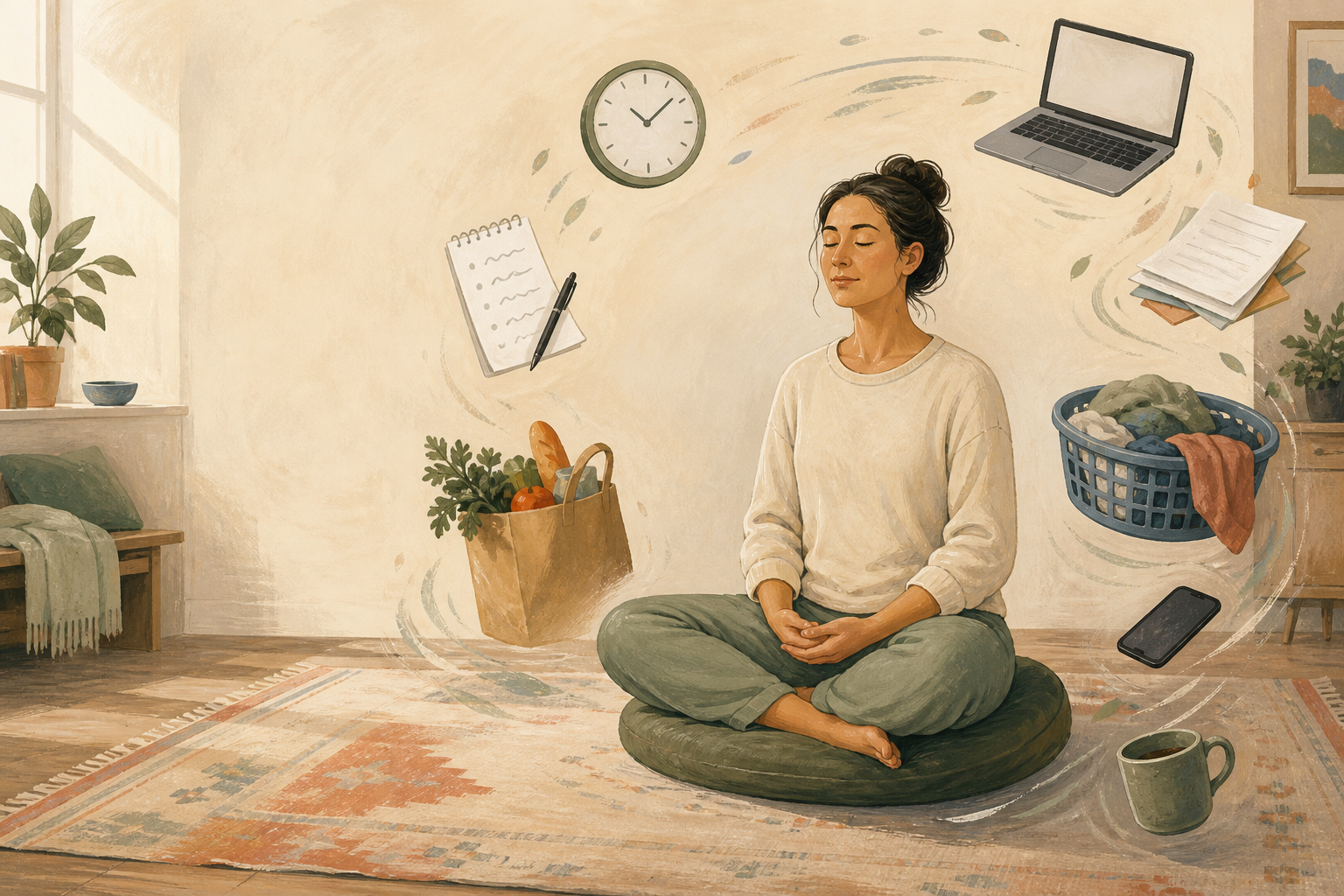
The demands we place upon ourselves can range from work commitments and family responsibilities to household chores and an ever-growing list of practical tasks. We may tell ourselves that, once these things are sorted, we will be able to settle into some practice. However, as we know, these tasks are rarely, if ever, complete. There is always something else to do.
One way of countering this tendency is to approach practice with the intention of giving ourselves permission to sit. We know there are things to be done and tasks to be completed. But if we make a conscious decision to dedicate 5, 10, 15 or 20 minutes to practice, we can place those demands on hold for that period of time.
This change of mindset is partly about caring for our own well-being. It is about allowing ourselves an opportunity to pause, to nurture ourselves and to step out of the momentum of doing. Even if our immediate aim is simply to function more skilfully and productively when we return to work, this is a worthwhile act of care.
But it can also be a deeper and more significant commitment to our personal development: a commitment to living with greater wisdom and compassion, both for ourselves and for those around us.
So, when planning a meditation, you may like to try giving yourself permission to sit for that time without needing to attend to your mental ‘to-do’ list. This does not mean that the list disappears, or that the demands of life are unimportant. It simply means that, for a short while, you are choosing to give your attention to something else.
Doing so can support your meditation in a number of ways:
Setting the to-do list aside can lessen its pull on your attention during practice. When thoughts, plans or images do arise, you may be better able to acknowledge them without becoming caught up in them.
It helps you create a space that is yours, no matter how strong the external demands on your time and energy may seem. Within that protected space, you can bring your attention more fully to the practice.
Reminding yourself that this is protected time and space can make it easier to remain with the practice for the period you have chosen, rather than ending it early in response to the next thing your mind tells you needs doing.
Of course, it is also helpful to remember that the whole of our daily experience can provide an opportunity for mindfulness practice. We do not need ideal conditions in order to pause, reconnect with the body or bring a little more awareness to what is happening.
If you find yourself in a challenging situation, see whether you can bring the same commitment and care to your well-being that you would bring to a period of sitting practice. Sometimes, giving ourselves permission to pause is the beginning of practice.